
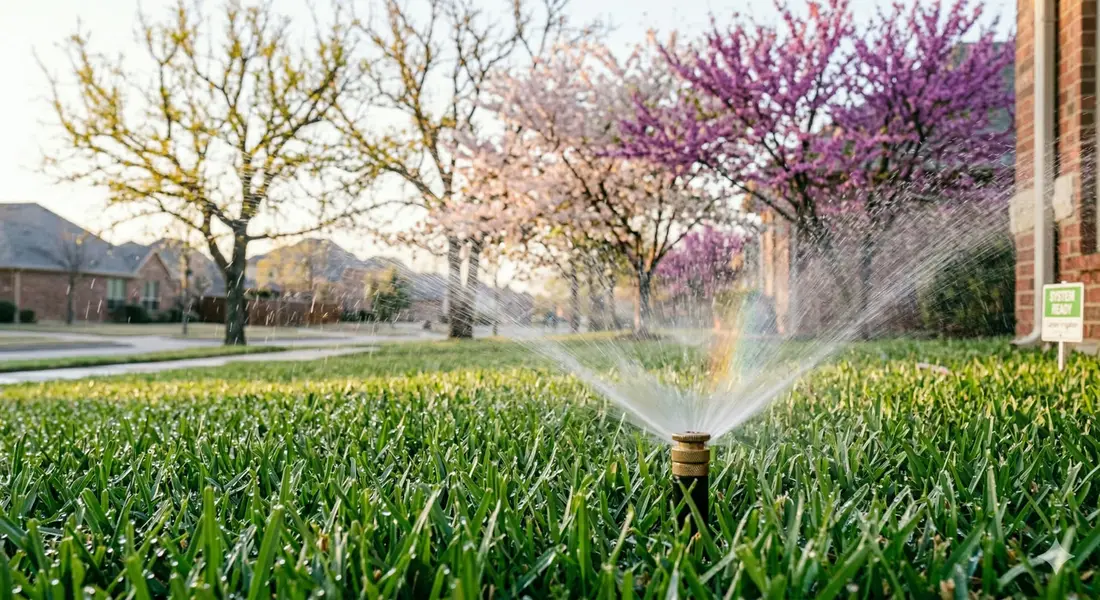
Every spring we get a wave of calls from homeowners who had a "startup" done by another company in March and then had a major problem in June. Usually the same story: the previous tech turned the water back on, watched a couple of zones run, and left. That's not a system check. That's a switch flip. Here's what a real spring startup should actually catch.
Why It Matters in North Texas
Our winters aren't long, but they're hard on irrigation systems. A few hard freezes in January or February can crack a backflow body, split a riser, or stress a valve enough to fail when you put pressure back on it in March. The damage is rarely visible from outside the box — the only way to know is to actually look.
By the time July arrives and you really need the system, a missed problem from March has had three months to get worse. A leaking valve becomes a flooded yard. A weak head becomes a dry zone. A failing controller becomes a dead system in the heat.
What a Real System Check Covers
1. Backflow Inspection (and Re-Pressurization, Slowly)
The first job is to check the backflow preventer for freeze damage before putting pressure back on it. If it cracked over winter, slamming the system back on can rupture it completely and flood the area. We open the valves slowly, watch for leaks, and listen for hissing.
2. Run Every Zone Individually
Not "a few zones." Every zone. Each one runs for at least 2-3 minutes while we walk it. We're checking every head — looking for cracks from freeze, mower damage, mis-aimed spray patterns, and clogged nozzles.
Most systems have at least one head per zone that needs adjustment after winter. The whole point of the startup is to find them now, not after your grass has been browning for two weeks.
3. Pressure Check at the Heads
If the system pressure is too low, you get poor coverage. Too high and you get misting that the wind blows away before it reaches the lawn. We check pressure at the heads and adjust if needed.
4. Controller Programming Review
A surprising number of systems are still on last summer's run times. That means they're either over-watering for the cooler weather or under-watering as we move toward May. We reprogram with seasonal-appropriate run times and walk you through the changes.
If you've got a smart controller (Rachio, Hunter, Rain Bird WiFi), we check the WiFi connection, verify the weather data is updating, and make sure the seasonal adjustment is engaged.
5. Check for Hidden Leaks
With every zone tested and the system back up, we listen at the meter and at the valve boxes for the sound of running water with the system off. That tells us if there's a slow leak we couldn't see during the zone tests. North Texas clay can hide a lot of underground water.
6. Walk-Through and Notes
Before we leave, we walk you through what we found, what we adjusted, what (if anything) needs replacement, and what to watch for over the next month. You get our notes in writing.
What a Cheap Startup Misses
The five-minute version that some companies offer for $39 typically misses:
- Cracked backflow bodies that hold pressure briefly before failing
- Solenoids that energize but don't fully open
- Heads that look fine standing still but spray sideways under pressure
- Programming that hasn't been adjusted since the previous owner moved out
- Slow leaks in valve boxes
Those are the issues that turn into emergency calls in summer. The whole point of a real startup is to find them in March when there's no urgency.
When to Schedule
Mid-February through late March is the sweet spot. You want it done before consistent watering season (typically mid-April here) so any repairs can happen on a normal schedule rather than under pressure. Our spring schedule starts filling up by early March, so calling early is the safer move.
Book a System Check
Call (469) 980-0696 or fill out the form on our contact page and select "System Check" as the service. We'll get you on the schedule and walk through what we find together.