
FOUNDATION DRIP SYSTEM
Perimeter drip lines that keep North Texas clay soil hydrated and protect your foundation from cracking.
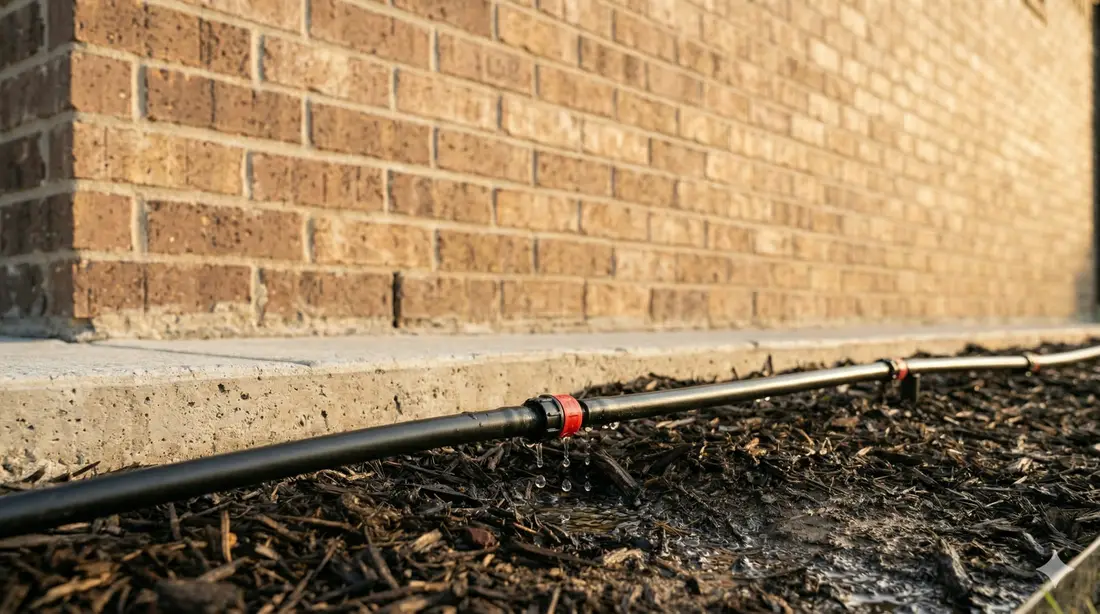
A foundation drip system runs low-volume drip tubing along the perimeter of your house, watering the soil right next to the slab so it stays evenly hydrated through the brutal North Texas summers. The reason this matters: our soil is expansive black clay, which swells when wet and shrinks when dry. When the soil under one corner of your foundation dries out faster than the rest, the slab moves, and that's when you see drywall cracks, sticking doors, and gaps between your countertops and walls. Foundation drips even out the moisture, which keeps the slab stable. We design and install custom systems with pressure-compensating tubing, dedicated zones on your existing controller, and root-aware emitter spacing so the water actually reaches the soil that needs it.
WHAT WE SEE IN THE FIELD
If any of these sound familiar, it's time to call.
Your Foundation Has Already Moved Or Been Repaired
"Recent pier work, leveling, or visible cracks in drywall"
If you've had foundation repair, a drip system is one of the cheapest ways to protect that investment. Foundation companies routinely recommend it because dry clay is what causes the slab to move in the first place. Without consistent moisture, you'll be back paying for more pier work in a few years.
Cracks Are Starting To Show In Drywall Or Brick
"Hairline cracks, sticky doors, gaps between trim and walls"
These are early warning signs that your slab is moving. Catching it now with a foundation drip is dramatically cheaper than waiting for the cracks to widen and needing actual structural work. We've seen plenty of houses where a drip system stopped the movement before it became a real problem.
Soil Visibly Pulling Away From The Slab
"Gaps between the dirt and the foundation edge during dry months"
If you can see a gap between the soil and your slab edge in July or August, your foundation is at risk. The soil contraction is exactly what we install foundation drips to prevent. The longer the soil sits dry, the more the slab settles unevenly.
You're In A New Build And Want To Be Proactive
"Recent construction in a North Texas neighborhood with clay soil"
New homes in North Texas are sitting on the same clay soil that moves under older homes. Builders rarely include foundation drip systems even though they cost a fraction of what foundation repair would cost down the road. Installing one in the first year or two of ownership is the cheapest insurance you can buy.
You're Hand-Watering With A Soaker Hose Every Summer
"Dragging hoses around the perimeter of your house in July"
If you already know your foundation needs water and you've been doing it manually with soaker hoses, an automated drip system pays for itself in convenience alone. Plus it's actually consistent, which a soaker hose run by hand never is.
PARTS ON EVERY TRUCK, FOR EVERY MAJOR BRAND
Our primary drip install brand for foundation systems. Integrates cleanly with existing Rain Bird controllers and spray valves.
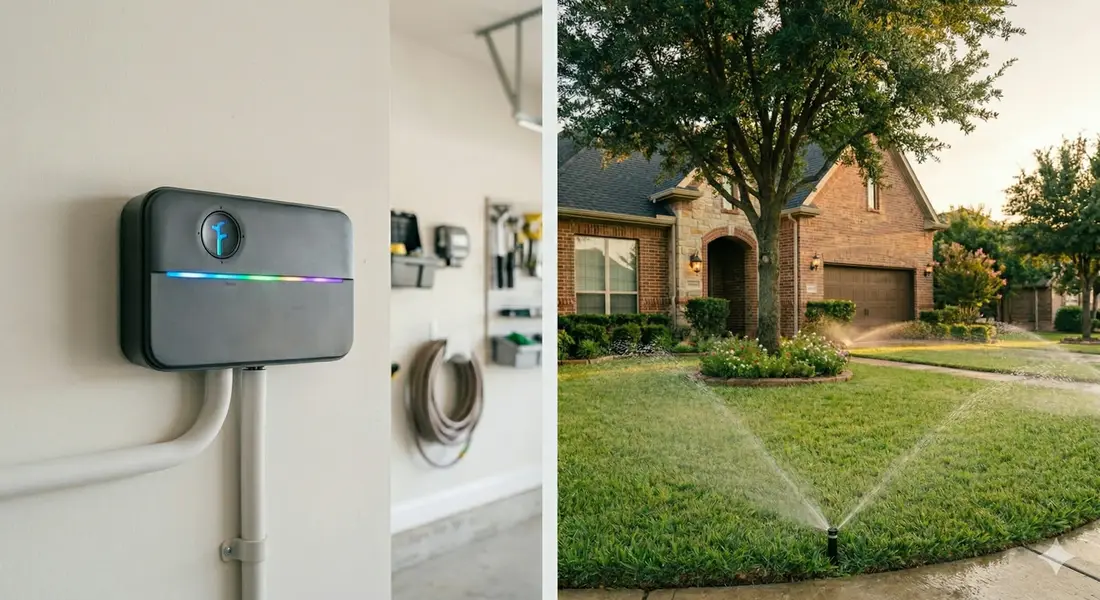
Our preferred smart controller for foundation drip — handles the seasonal scheduling automatically, dialing back in winter and ramping up in summer.
We also install Netafim pressure-compensating drip tubing rated for buried perimeter installs, the most durable option for foundation drips.
We also diagnose and service Hunter HDL dripline systems that hold up to North Texas heat and clay conditions.
INCLUDED WITH EVERY JOB
No hidden fees. No surprises. Here's exactly what's covered.
Custom perimeter design measured to your foundation footprint
Pressure-compensating drip tubing rated for buried install
Pressure regulator and filter at each zone
Dedicated zone wired into your existing controller
Soil moisture verification after install
Seasonal scheduling guidance based on summer/winter cycles
HOW WE DO IT
Walk the Foundation
We measure the linear footage around your foundation, identify the high-risk corners, and check the existing landscape and irrigation to plan a system that doesn't conflict with your beds, plants, or sprinkler zones.
Design the Drip Zone
We create a custom layout with pressure-compensating tubing routed along the perimeter, emitter spacing matched to your soil and exposure, and a dedicated zone on your existing controller, no separate timer to manage.
Install with Filter & Regulator
We trench, lay the tubing, install a dedicated pressure regulator and filter, and tie into your existing controller and water supply. Most installs are done in one day for a typical residential foundation.
Verify & Schedule
We run the system, walk the perimeter to confirm even moisture delivery, set the controller schedule for current conditions, and walk you through how to adjust it seasonally.
REAL RESULTS FROM REAL NEIGHBORS
"Carlos from Carson Irrigation & Drainage came to fix several broken sprinkler heads in my yard. He was on time, professional, and explained everything he was doing. He replaced the damaged heads and adjusted the system…"

"Carson and his team were great. He came out today and diagnosed the problem quickly. He made sure that I understood everything that he was about to do. I definitely would use him again. Very affordable."

"Carlos and his partner were very punctual and professional. They attended to my Sprinkler system efficiently and explained the problem in detail. We highly recommend them if you need help with your irrigation system."

FREQUENTLY ASKED
It's a drip irrigation zone designed specifically to water the soil right next to your foundation, usually 12–18 inches out from the slab edge. The goal is to keep the clay soil consistently moist so it doesn't shrink in summer drought, which is what causes most foundation movement in North Texas. The system uses low-volume drip tubing tied into your existing controller and runs on its own schedule, separate from your lawn zones.
North Texas sits on expansive black clay soil. When the soil under your foundation dries out, it shrinks and pulls away from the slab, which causes settling, cracks, and door/window misalignment. A foundation drip system maintains consistent moisture during the hot, dry summer months when clay soil contracts the most. It's preventive maintenance that costs a fraction of foundation repair.
It won't repair existing damage, but it will significantly reduce the chance of new movement. Many foundation repair companies recommend installing a drip system after they level a foundation specifically to keep the clay stable so the repair holds. If you've already had pier work done, a foundation drip is one of the best things you can do to protect that investment.
It depends on the season. In peak summer (June–September), most North Texas foundation drips run 2–3 times per week for 20–40 minutes per zone. In spring and fall, less frequent. In winter, it usually runs once a week or less to keep the soil from going completely dry. We set up a starting schedule and walk you through how to adjust based on rainfall and soil conditions.
Yes. We add it as a dedicated zone on your existing controller. It needs its own pressure regulator and filter (drip and spray run at very different pressures) but it shares your water supply and your controller. No new timer, no separate app, just one more zone in your existing schedule.
Quality drip tubing lasts 10–15 years buried, longer if it's properly installed below the mulch line and protected from sun exposure. The pressure regulator and filter typically need replacement every 5–7 years. Emitters can clog over time from mineral buildup in North Texas water, but we use self-flushing emitters that minimize this problem.
WE KNOW THIS SOIL, THIS WATER, THIS WEATHER
Foundation drip systems are practically standard maintenance in North Texas because of our clay soil. We install them most often after a foundation repair company recommends one, but the smart homeowners install them before there's a problem. The investment is small compared to what pier work costs.
WHAT ELSE WE DO
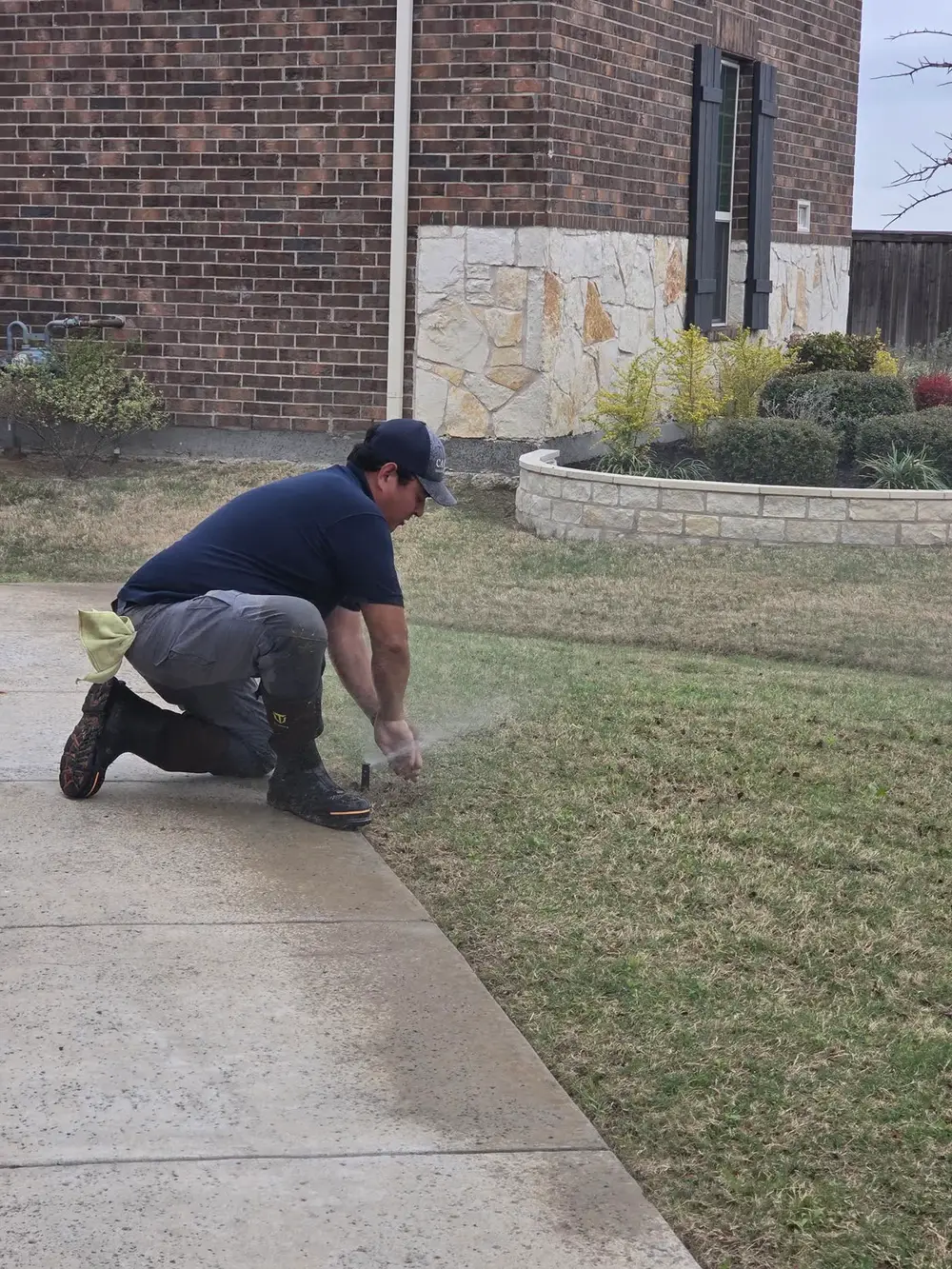
Sprinkler Repair & Maintenance
Same-day diagnosis and repair for broken heads, leaks, and controller issues.
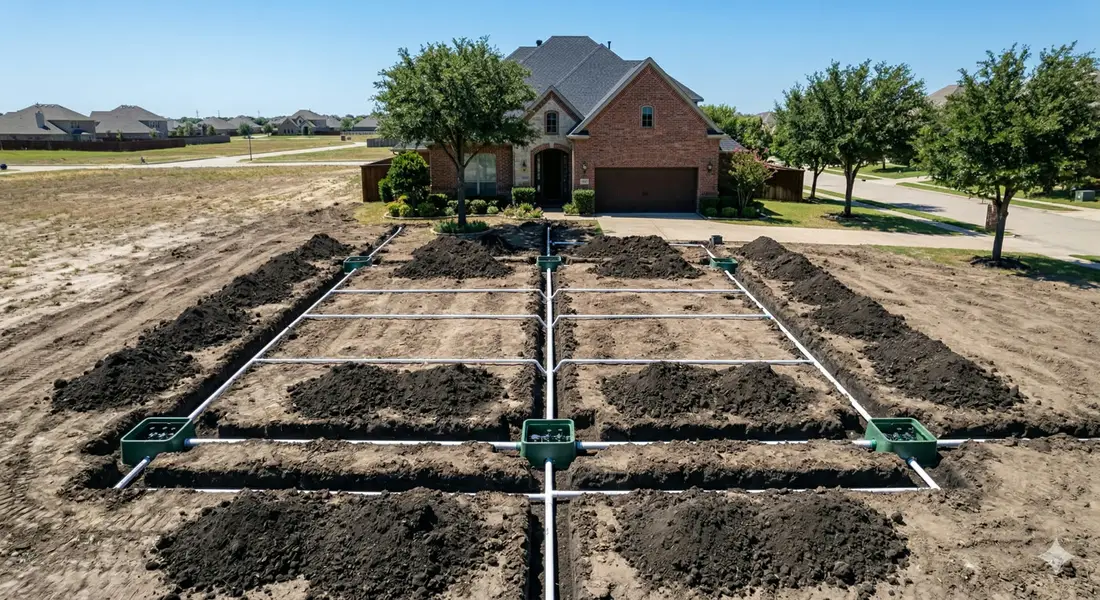
Sprinkler System Installation
New residential sprinkler systems designed for North Texas lots, soil, and water pressure.
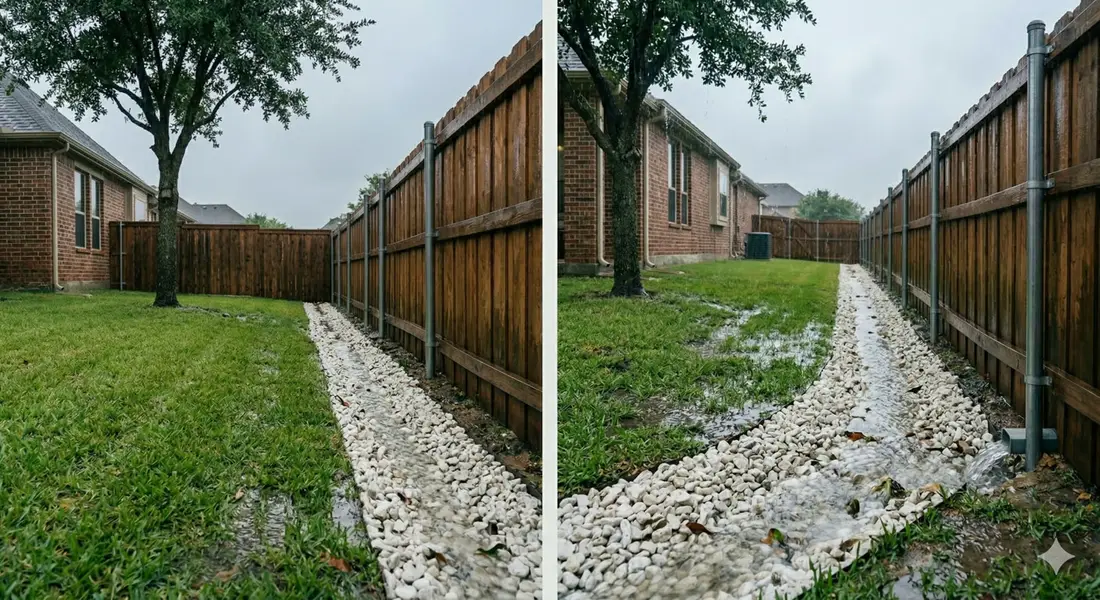
Drainage Solutions
French drains, channel drains, and custom grading to eliminate standing water.
Smart Controllers
WiFi-enabled Rachio, Rain Bird, and Hunter controllers that cut water waste.
NEED FOUNDATION DRIP SYSTEM?
Estimates available. Same-day or next-day service. No obligation.