
LEAK DETECTION
We find underground irrigation leaks fast, without tearing up your lawn.
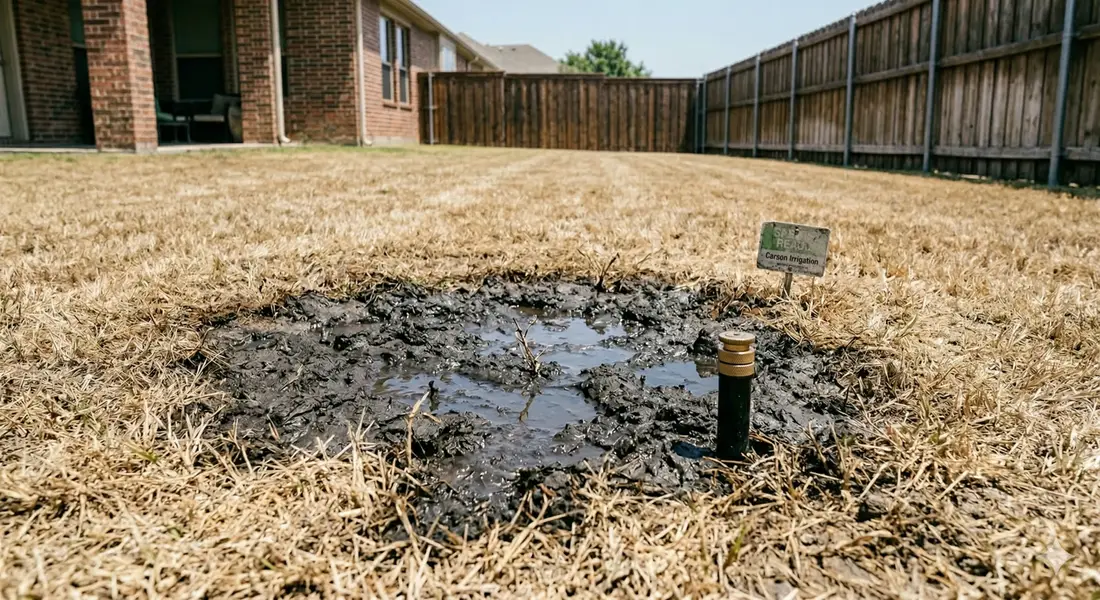
If your water bill suddenly doubled and you don't know why, there's a good chance your irrigation system is leaking somewhere under the lawn. We use pressure testing and zone isolation to pinpoint exactly where the leak is, usually within an hour, and we only dig where the leak actually is. No exploratory trenching, no tearing up your yard looking for it. Most leaks get repaired the same visit. The common ones we find: cracked lateral lines from soil shifting in North Texas clay, failed fittings at head connections, and leaking valve diaphragms.
WHAT WE SEE IN THE FIELD
If any of these sound familiar, it's time to call.
Sudden Water Bill Spike
"Your bill jumped without any change in how you use water"
A hidden irrigation leak is the most common cause of unexplained water bill increases in North Dallas. A single cracked lateral line can waste 15,000–60,000 gallons a month. We run a pressure test on your system to confirm whether irrigation is the source before you waste time checking everything else.
Wet Or Soggy Spots When The System Isn't Running
"Mushy grass or visible wet areas days after the last sprinkler cycle"
Water collecting when the system hasn't run means something is leaking underground. We zone-isolate to find exactly which lateral line is the source, pinpoint the leak location, and repair it, usually the same visit.
A Zone That Loses Pressure While Running
"Heads barely pop up or spray weakly compared to other zones"
Weak pressure in one zone means water is escaping somewhere before it reaches the heads. We pressure-test the zone, locate the leak, and fix it before it gets worse, a small crack today is a catastrophic failure next month.
Unusually Green Patches
"A patch of grass that's noticeably greener than the rest of the lawn"
An underground leak is essentially fertilizing and irrigating one spot 24/7. The extra-green patch is almost always directly over the leak. We confirm with pressure testing and dig at the exact point, no exploratory trenching.
Running Water Sound Near The Meter
"You can hear water moving at the meter with all fixtures off inside"
This is a strong sign of an irrigation leak between the meter and the backflow. We pressure-test the mainline to confirm, then locate and repair the leak before it damages the foundation or wastes thousands of gallons.
PARTS ON EVERY TRUCK, FOR EVERY MAJOR BRAND
Our primary brand. We carry Rain Bird lateral fittings, valve diaphragms, and mainline couplers on every truck for same-visit repair.
We also diagnose and service Hunter systems, with a full stock of rotors, sprays, and valve components for same-visit repairs.
We also diagnose and service Orbit systems common in builder-grade installs, and can upgrade failing components to Rain Bird equivalents.
We also diagnose and service Toro and Irritrol systems, cross-referencing to compatible replacements when original parts are no longer available.
INCLUDED WITH EVERY JOB
No hidden fees. No surprises. Here's exactly what's covered.
Full system pressure test
Zone-by-zone isolation testing
Underground leak locating without unnecessary excavation
Leak repair (same visit in most cases)
Post-repair pressure verification
Written report of findings
HOW WE DO IT
Pressure Test Entire System
We pressurize the system and monitor for pressure drops across all zones, this tells us immediately whether a leak exists and roughly how severe it is.
Isolate Zones
We test each zone independently to narrow the leak down to a specific zone and section of pipe, no guesswork, no unnecessary digging.
Locate Leak
Using pressure readings and visual inspection, we pinpoint the exact leak location, whether it's a cracked lateral line, a failed fitting, or a leaking valve diaphragm.
Repair Same Visit
Most leaks are repaired on the spot. We carry Rain Bird fittings, couplers, and replacement parts for all major brands on every truck.
REAL RESULTS FROM REAL NEIGHBORS
"Above and beyond, creative solutions for a complex issue. The previous owner had built a concrete slab on top of the sprinkler piping… in due time it cracked, and now we had a big mess under our patio and house. Carlos…"

"Carlos did an amazing job with multiple items. He found and fixed an underground water leak, it was a big project and he delivered. Then we asked him back to fix sprinkler heads, bubblers, rotors, etc. Lastly, he…"

"Carlos & Nelson did an amazing job. Explained everything in perfect detail and did an amazing job fixing another person's work. Even installed a new controller as a last minute request and set the whole app up for us…"

FREQUENTLY ASKED
The biggest sign is a sudden spike in your water bill. Other signs: unexplained wet or soggy spots in the yard, areas of grass that are much greener than the rest, puddles forming when the system hasn't run, or a zone that loses pressure while running.
In most cases, yes. We use pressure testing and zone isolation to narrow the leak to a specific zone and section of pipe. We only dig where the leak actually is, no exploratory trenching.
A single cracked lateral line can waste 500–2,000+ gallons per day depending on pressure and crack size. That shows up on your water bill fast, especially in summer. A stuck valve that won't close is even worse, because it's essentially running water 24/7 until someone shuts it off.
Absolutely. Most irrigation leaks are underground and invisible from the surface. The water may be draining into sandy subsoil, running along a pipe trench, or pooling under your foundation. A pressure test will confirm whether your irrigation system is the culprit.
More than most homeowners expect. A single cracked lateral line can waste 15,000–60,000+ gallons per month depending on water pressure and crack size, and that shows up clearly on your water bill. A stuck valve that won't close is even worse, because it's essentially running water 24/7 until someone shuts it off.
No. Our detection process, pressure testing and zone isolation, is completely non-invasive. We only dig at the exact point where the leak is confirmed, which is usually a small area. We patch the excavation and replace sod when the repair is done. Most homeowners can't tell where we worked within a few weeks during North Texas growing season.
WE KNOW THIS SOIL, THIS WATER, THIS WEATHER
Leaks behave differently in North Texas clay than almost anywhere else. A small crack can drain hundreds of gallons a day without ever showing a wet spot on the surface because the water moves sideways through the subsoil. Pressure testing is the only reliable way to find them here.
WHAT ELSE WE DO
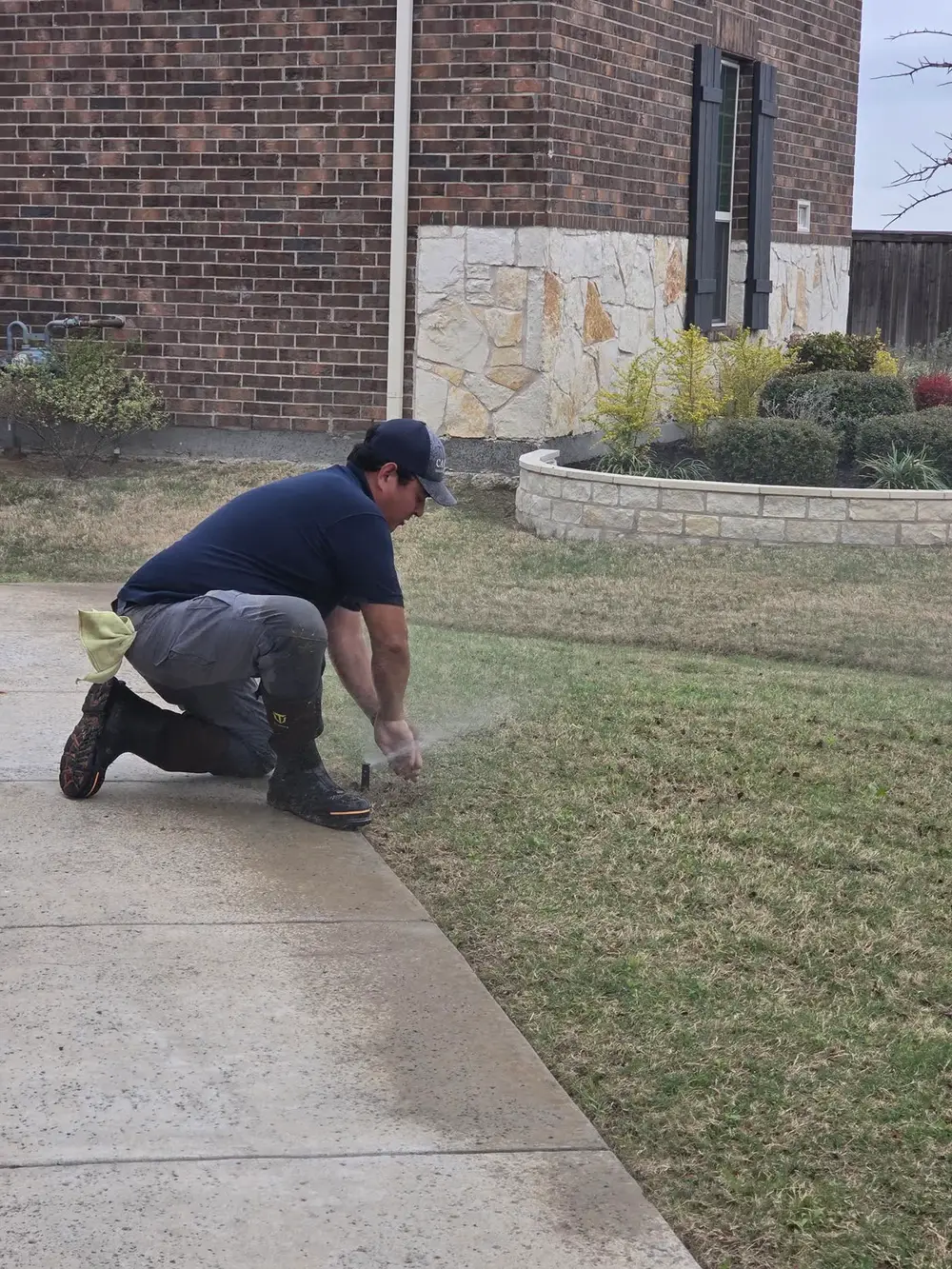
Sprinkler Repair & Maintenance
Same-day diagnosis and repair for broken heads, leaks, and controller issues.
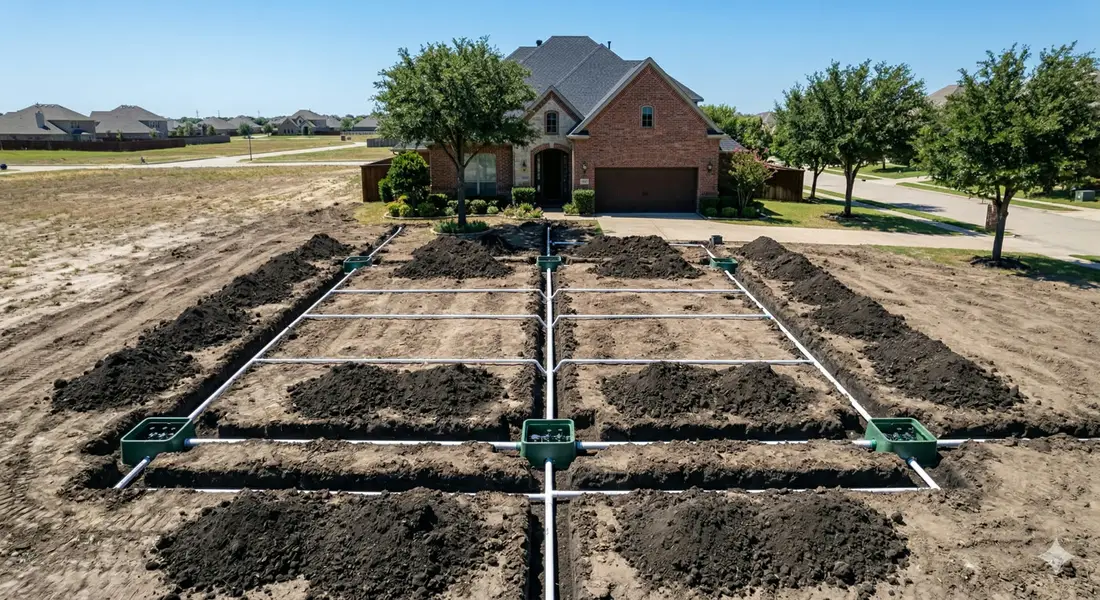
Sprinkler System Installation
New residential sprinkler systems designed for North Texas lots, soil, and water pressure.
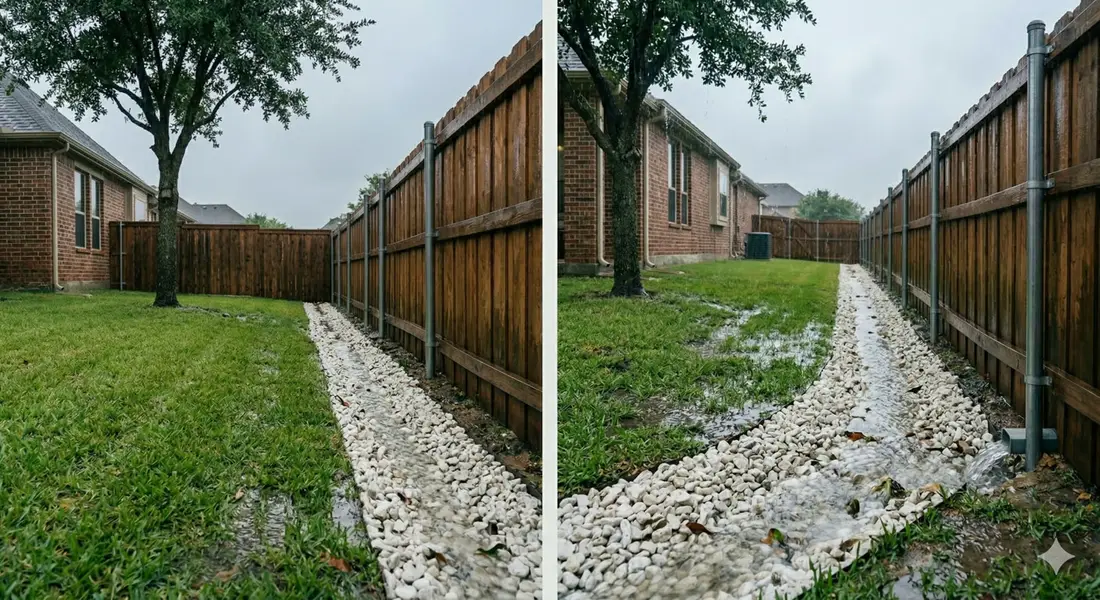
Drainage Solutions
French drains, channel drains, and custom grading to eliminate standing water.
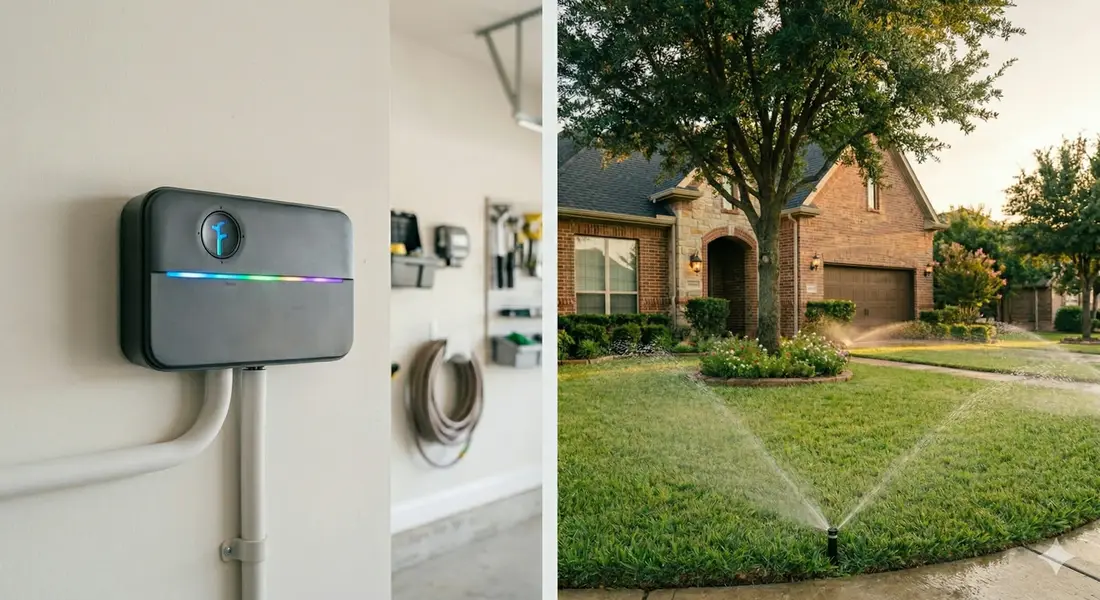
Smart Controllers
WiFi-enabled Rachio, Rain Bird, and Hunter controllers that cut water waste.
NEED LEAK DETECTION?
Estimates available. Same-day or next-day service. No obligation.