
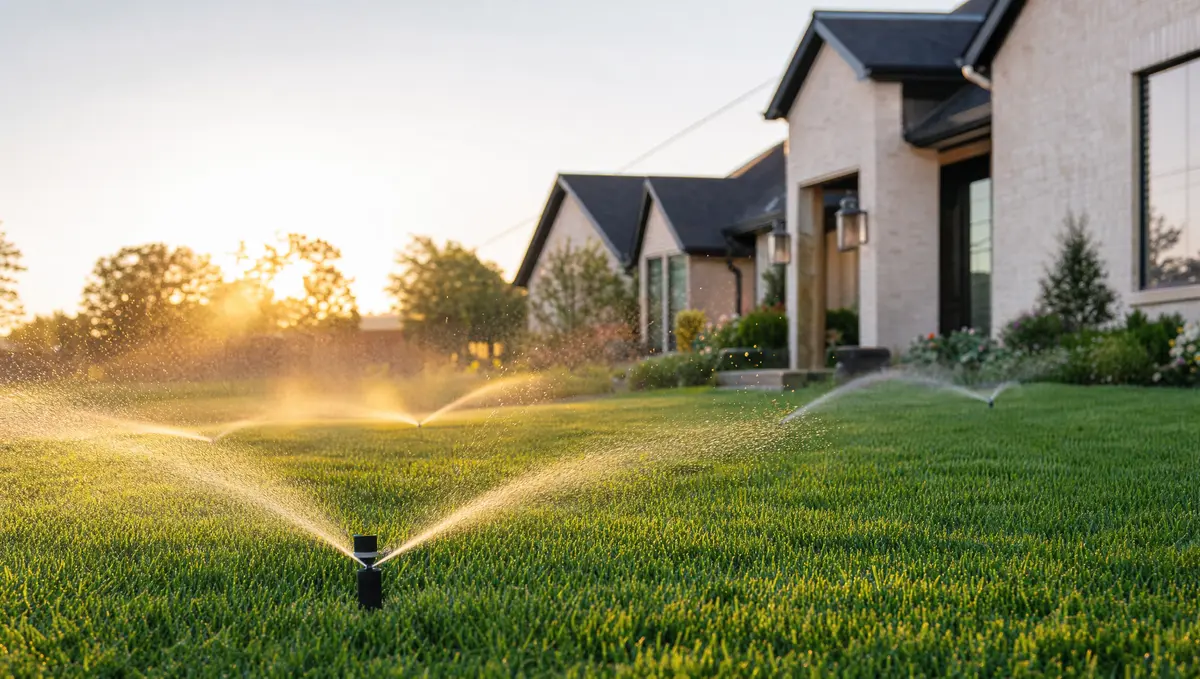
The single most common mistake we see on North Texas lawns is overwatering — not underwatering. Sprinkler systems running on factory defaults water way too much in spring and fall, then can't keep up with peak summer. Here's a real watering schedule for the North Dallas climate, and how to adjust your system month by month.
The North Texas Climate Reality
We're in USDA Zone 8a/8b. Summers are brutal (90s and 100s for weeks), winters are mild but unpredictable, spring is short and wet, and fall is dry and warm. Most North Texas lawns are St. Augustine or Bermuda — both warm-season grasses that need different amounts of water depending on the season.
Layer on the heavy black clay soil that holds water against itself, and you get a watering problem that isn't solved by "set it and forget it" timer schedules.
Spring (March–May)
Most homeowners water way too much in spring. The ground is still cool, rain is more frequent, and roots are still waking up. Run your system once or twice a week, deeply — meaning long enough for water to soak 4–6 inches into the soil. Skip watering after rain.
If your system is on a smart controller (Rachio, Hydrawise, Rain Bird ESP), it should automatically skip watering when rain is forecast or recently fell. If you're on a basic timer, you need to manually adjust or pause the system after big rains.
Summer (June–September)
Peak demand. North Texas summers cook your lawn — 100°F+ for weeks, low humidity, and persistent wind. Most established St. Augustine and Bermuda lawns need about 1 to 1.5 inches of water per week in midsummer, split across your city's allowed watering days.
Most cities (Frisco, McKinney, Plano, Allen, etc.) restrict watering to two days per week in summer, with no watering between 10am and 6pm. Check your city's current schedule — they update them seasonally.
Run your system before sunrise if possible. Watering at 4–6am gives the soil time to absorb before the sun cooks the surface and lets the blades dry before nightfall (which helps prevent fungal disease).
Fall (October–November)
Roots are still active and the grass is recovering from summer. Water deeply but less often than summer — once or twice a week, depending on rainfall. As temperatures drop in November, start cutting back further.
This is also winterization season. Schedule your sprinkler blowout for late October through mid-November, before the first hard freeze. Cracked backflow preventers from skipped winterizations are one of our most common spring service calls.
Winter (December–February)
Most North Texas lawns go dormant in winter and don't need much water. The system should be off and winterized by mid-November. If we get an unusual dry stretch in January or February, run the system briefly once every 2–3 weeks to keep the grass crown hydrated — but only on days above freezing.
Signs You're Watering Too Much
- Mushrooms or fungus appearing in the lawn
- Spongy or squishy spots when you walk on the grass
- Water running off the lawn onto sidewalks or driveways
- A water bill that's twice what your neighbors pay
- Mosquitoes breeding in standing water
Signs You're Watering Too Little
- Footprints stay visible in the grass after you walk on it (grass should spring back within minutes)
- Color shifting toward blue-gray instead of bright green
- Brown or thinning patches that aren't from foot traffic or pets
Smart Controller Adjustments
If you have a Rachio, Hydrawise, or Rain Bird ESP smart controller, it'll do most of this automatically based on weather data. But it needs to know your soil type (clay for most of us), your sun exposure per zone, and your local watering restrictions. We program these on every smart controller install and walk you through how to tweak them yourself.
Want Help Dialing It In?
If you're not sure whether your system is over- or under-watering, we can run a quick audit during any service call — measure precipitation rate per zone, check coverage, and reprogram the controller for the season. Call (469) 980-0696 or fill out the form on our contact page.