
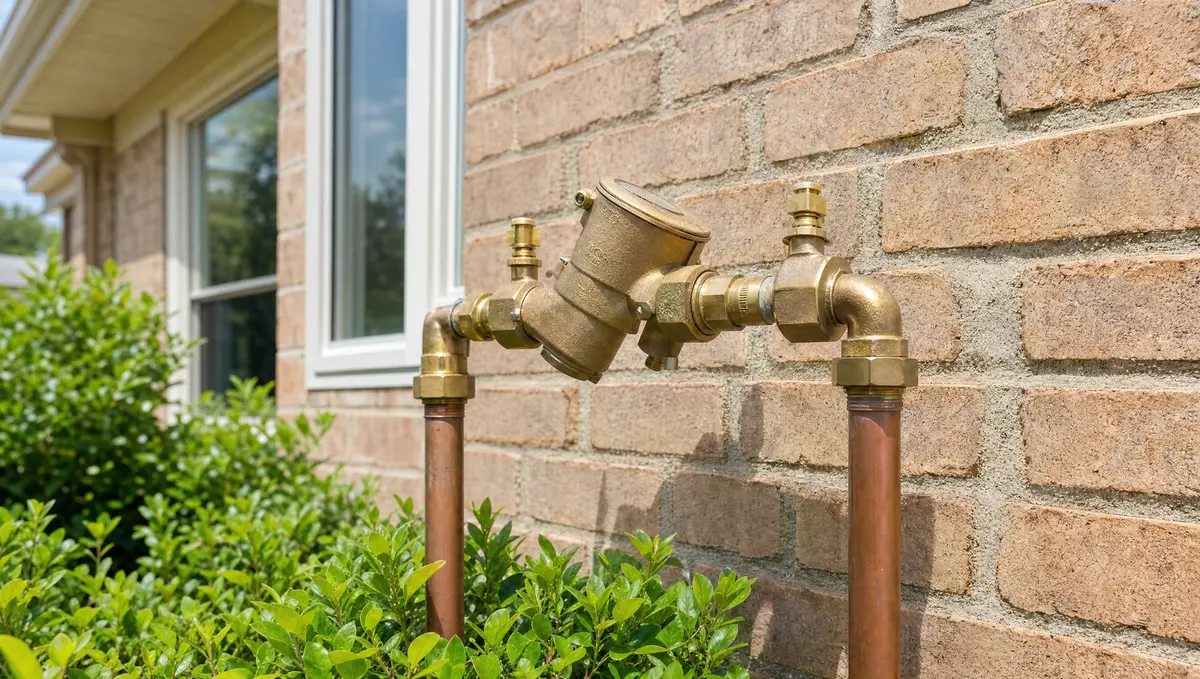
Most North Texas homeowners have never thought about their backflow preventer, which is reasonable — it's a plain metal device near the hose bib or where the irrigation line branches off the main, and it does its job silently for years. It is also, in most cities here, the one part of your irrigation system subject to an actual legal testing requirement.
Here's what that requirement is and what it means in practice.
What a Backflow Preventer Does
Your irrigation system and your drinking water come from the same supply. Sprinkler lines sit in soil, alongside fertilizer, pet waste, and whatever else is in the ground. Under normal conditions water flows one direction — from the main into the irrigation system — and that's fine.
The problem is pressure loss. When a water main breaks or the system depressurizes, flow can briefly reverse. Without a backflow preventer, that reversal can pull contaminated water out of the soil around your sprinkler lines and back into the potable supply. The device is a one-way gate that makes this physically impossible.
That's why it's regulated rather than optional. It isn't protecting your irrigation system — it's protecting the drinking water supply, including your neighbors'.
What Cities Require
Frisco, McKinney, Plano, and most surrounding cities require that irrigation backflow assemblies be tested periodically by a licensed tester, with results filed with the city. The specifics — how often, which form, which license class, what the fee is — vary by city and get updated, so the current requirement is what matters rather than what applied a few years ago.
The practical points that don't change:
- The requirement is on the homeowner, not the city. Nobody will usually come find you; the obligation still exists.
- Testing must be done by a licensed backflow tester. This isn't a homeowner task, and a general handyman can't file the result.
- Results are filed with the city, so a passed test creates a record that you're compliant.
- New installs require it from the start, as part of the irrigation permit and inspection.
Check your own city's current requirement directly — Frisco, McKinney, and Plano each publish theirs, and they are not identical.
What the Test Involves
It's quick — usually around 30 minutes. A licensed tester attaches gauges to the test ports on the assembly, closes and opens valves in sequence, and measures whether each check valve holds pressure the way it's supposed to. Either it holds or it doesn't; there's no judgment call involved.
Your irrigation water is off during the test, which is the only disruption. We do this as part of a normal service call, so it can be combined with other work rather than needing its own visit.
What Happens If It Fails
Most assemblies pass. When one doesn't, the cause is usually a worn rubber seal or a check valve that isn't seating, and a rebuild kit resolves it — the assembly stays, the internals are replaced, and it's retested the same visit. Full replacement is needed less often, typically where the body is cracked from freeze damage or the unit is simply old enough that parts are no longer sensible.
Freeze damage is the common North Texas cause. The assembly sits above ground, which makes it the most freeze-vulnerable component of the whole system. A backflow preventer cracked by a hard freeze will fail its test, and it will also leak continuously. This is a large part of why winterization exists — insulating that device is one of its main jobs.
When to Get It Tested
Do it on whatever cycle your city requires. Beyond that, test after any hard freeze if the assembly wasn't insulated, before selling a house — an untested or failing assembly turns up during inspection — and as part of a new install, where it's built into the permit process.
Fall is the practical time. You find out whether it needs work before winterization, rather than discovering a cracked assembly in March when everyone is booking spring startups.
Call (469) 980-0696 or use our contact page to schedule. More about backflow testing and repair.