
Winterizing an irrigation system in North Texas is not the same job it is in Minnesota. We don't have months of frozen ground, so systems here don't need the full compressed-air blowout that colder regions require. What we do get is sudden hard freezes on systems that spent the year full of water — and that's a narrower problem with a narrower solution.
Which means a real portion of this is genuinely DIY. Here's an honest split, including the parts we'd rather you handled yourself because paying someone is a waste of your money.
What You Can Do Yourself
1. Turn Off the Controller Properly
Use the "Rain" or "Off" setting rather than cutting power. Most controllers keep your programming in memory but lose the clock when unpowered, and some older units lose everything. Rain mode stops watering while preserving the schedule, so spring startup doesn't begin with reprogramming every zone.
2. Close the Irrigation Shutoff Valve
Find your irrigation shutoff — usually near the backflow preventer or where the irrigation line branches from the main — and close it. This is the single most valuable step, because it means a component that cracks in a freeze isn't connected to a pressurized supply. A cracked backflow preventer with the water off is a repair. The same crack with water on is a repair plus however many gallons ran before anyone noticed.
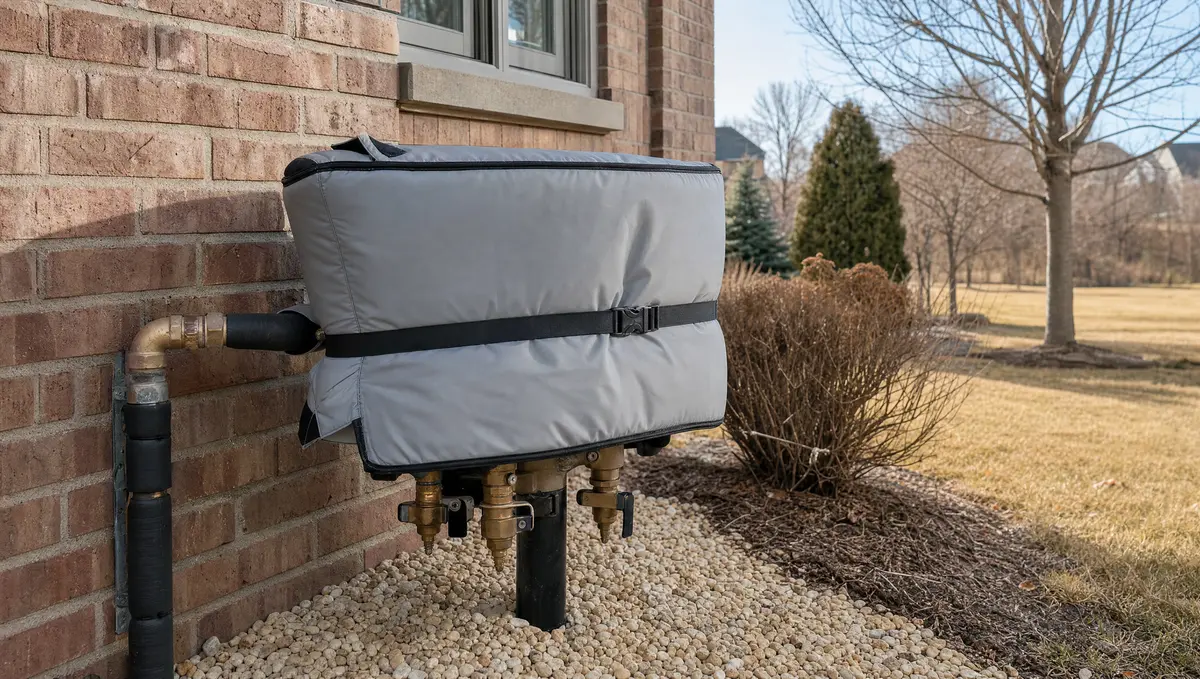
3. Insulate the Backflow Preventer
This is the most freeze-vulnerable component you own, and wrapping it is genuinely within reach. Insulating covers are sold at any hardware store, or a towel wrapped in plastic and secured works. Two rules: don't block the small drain openings on the underside of the assembly, and make sure whatever you use stays dry, because wet insulation in a freeze is worse than none.
4. Drain What You Can Reach
Open the test cocks on the backflow assembly to let trapped water out, and if your system has accessible manual drain valves at low points, open those. Getting standing water out of above-ground components removes most of what can freeze and expand.
5. Disconnect Hoses
Not irrigation, strictly, but it's the same failure and it happens every year. A hose left connected traps water in the spigot and the pipe behind it, which is usually inside a wall. Disconnect every hose.
What's Worth Having Done
1. Finding What You Can't See
The DIY list protects what's visible. The parts that fail expensively are frequently the parts you'd never think to check — a lateral line running shallow because a previous repair left it high, a valve box holding standing water, a section of pipe exposed where soil eroded away over the summer.
Most of the value in a professional visit is the walk, not the wrapping.
2. Backflow Assessment
Winterization is the natural moment to check whether the assembly is actually sound, because a device already weeping slightly is a device that will crack in the first freeze. Finding that in October is a scheduled repair; finding it in March is an emergency plus a retest — see our post on backflow requirements.
3. Systems With Known Weak Points
If your system has had freeze damage before, has above-ground pipe, or has had multiple repairs over the years, the risk profile is different. Repairs sometimes leave sections shallower than original, and those are the first things to break. That history is worth having someone look at.
4. Blowing Out the Lines — Sometimes
Most North Texas systems don't need a compressed-air blowout, and we'll say so rather than sell one. Some do: systems with shallow lines, above-ground sections, or a documented history of freeze breaks. It's a judgment call that depends on your specific install, and it should be a recommendation with a reason attached, not a default line item.
The Honest Summary
If your system is in good condition, well buried, has no freeze history, and you're comfortable with the five DIY steps above — do it yourself. It's a straightforward afternoon and you don't need us.
Have it done if your system is older or has been repaired repeatedly, if it's ever had freeze damage, if you don't know where your shutoff or backflow preventer is, or if you'd simply rather someone with experience walk the system and tell you what they see. There's no wrong answer, but there is a wrong outcome: skipping it entirely and finding out in March. What a hard freeze actually breaks covers what that costs.
Book before the first freeze — the calendar fills through November. Call (469) 980-0696 or use our contact page. More about winterization.